

PDRN Serum: Benefits, Picks, and How to Use It
PDRN serum has become one of the most talked about products in Korean skincare over the past year.
PDRN, or polydeoxyribonucleotide, is an ingredient studied for its ability to support skin repair, calm irritation, and improve hydration, which is why it has become a staple in many k-beauty routines.
People are drawn to it because it promises visible results without needing an in-office treatment.
This review looks at how PDRN skincare works, what it can realistically do for the skin, and how it compares across different brands and formulas. It also breaks down who might benefit most from adding a PDRN serum to their routine, whether the goal is hydration, tone, texture, or that coveted glass skin look.
By the end of this article, readers will understand what to expect from consistent use, how to choose a formula suited to their skin type, and how to introduce PDRN serums safely into an existing regimen.
Key Takeaways
- PDRN is backed by research showing it may support skin repair, reduce inflammation, and improve hydration.
- The right formula depends on skin type and specific goals, such as brightening, firmness, or barrier support.
- Consistent use over several weeks is typically needed before visible changes in texture or tone appear.
What PDRN Is and What the Evidence Shows
PDRN comes with a solid clinical history in wound care and injectable aesthetics, but the version sold in serum bottles has a much smaller body of research behind it. Understanding the ingredient itself, how it works, and how delivery method changes the outcome helps explain why results vary so much between products.
Polydeoxyribonucleotide, Sodium DNA, and Salmon DNA
Polydeoxyribonucleotide is a fragmented DNA polymer, most often pulled from salmon or trout sperm. In skincare labels, it may also appear as sodium DNA or simply salmon DNA.
These fragments range from about 50 to 1,500 base pairs. That size matters because it affects how well the ingredient can move through skin and interact with cells.
Salmon-derived PDRN is the version with the longest track record. It was approved in Italy in 1994 for wound healing and skin conditions, and that approval shaped most of the research that came after it.
Not every “PDRN” product uses this exact source. Some newer formulas use plant-based alternatives that are chemically different, even though they borrow the same name and similar marketing claims.
How the A2A Receptor Pathway May Support Repair
PDRN’s main mechanism involves the A2A receptor, which sits on fibroblasts and other skin cells. When PDRN binds to this receptor, it can reduce inflammation and increase signals tied to tissue repair.
This pathway supports several processes at once:
- Wound healing, by helping the skin manage inflammation during recovery
- Tissue repair, through improved blood vessel signaling
- Collagen production, since fibroblasts play a direct role in building collagen
- Cell turnover and skin renewal, as new cells replace damaged ones
A second mechanism, called the salvage pathway, gives dividing cells raw nucleotides they can use to build new DNA. This matters most in wounds or damaged tissue, where cells are working to repair themselves quickly.
Topical Formulas Versus Injectable PDRN Treatments
Injectable PDRN treatments, often called skin boosters, deliver the ingredient directly into the dermis. This bypasses the skin’s outer barrier completely, which is why injectable studies show the strongest results for skin regeneration.
Topical PDRN faces a harder path. The stratum corneum blocks most large, water-loving molecules, and PDRN fragments are both large and highly polar.
Surface enzymes can also break down DNA before it penetrates deeply. Because of this, topical PDRN likely works through partial penetration and effects on the outer skin layers, not the deep dermal action seen in injections.
Why Results From Serums Should Be Viewed Realistically
Topical PDRN has real, documented support in two areas: skin barrier repair and post-procedure recovery. One controlled comparison found that topical PDRN reduced redness 18% faster and improved barrier resilience by 25% after fractional laser treatment, compared to an exosome-based product.
Evidence for anti-aging claims on normal, undamaged skin is much thinner. Most of those results come from injection studies, not leave-on formulas.
Consumers should treat PDRN serums as a supporting product, not a replacement for in-clinic treatments. It may help with barrier support or recovery after procedures, but claims of dramatic skin regeneration from a serum alone are not well supported by current research.
Potential Benefits for Different Skin Concerns
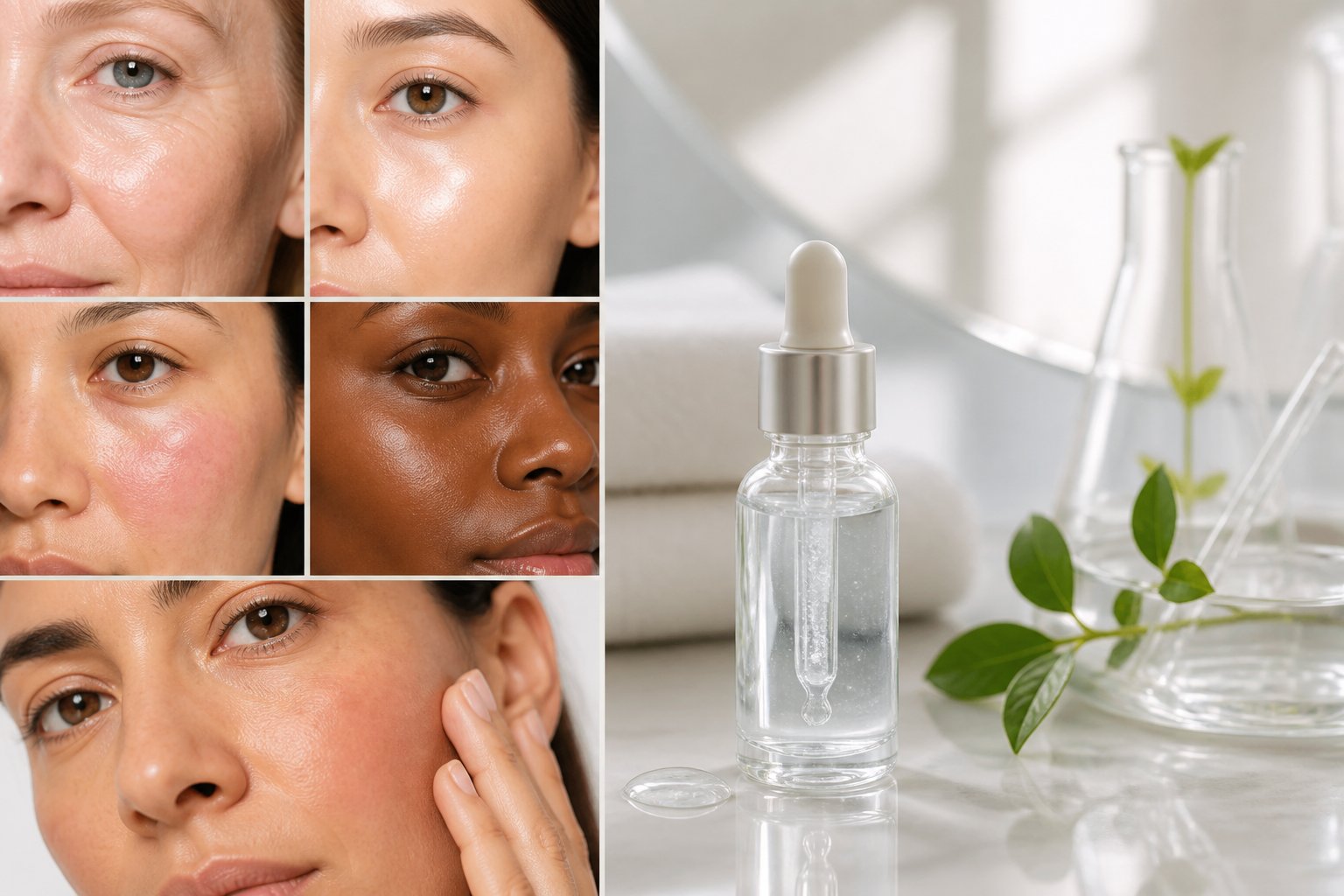
PDRN serum may help with several skin issues, from dryness to dullness to visible signs of aging. Each benefit depends on the formula, the skin type, and how the serum is used.
Hydration, Barrier Support, and Post-Irritation Comfort
PDRN is often paired with a strong moisture layer to support the skin barrier. This can matter for dry skin and dehydrated skin, since a weak barrier lets water escape faster.
Many people use PDRN serum after harsh treatments like retinoids or acids. This can help calm sensitive skin and reduce redness caused by irritation.
Common supporting ingredients include:
- Hyaluronic acid for surface hydration
- Panthenol to soothe and hold moisture
- Ceramides to reinforce the moisture barrier
Skin often feels calmer and less tight within days, though full barrier repair takes longer with consistent use.
Fine Lines, Elasticity, and Early Signs of Aging
PDRN is linked to fibroblast activity, the cells responsible for making collagen and elastin. This connection is why some serums are marketed for skin elasticity and firmness.
Over time, this may soften the look of fine lines, especially in areas prone to dryness like the eye area. Results tend to be gradual, not immediate.
PDRN is often combined with peptides for added support. Peptides send signals tied to collagen and elastin, while PDRN focuses on repair and renewal. Together, they target early signs of aging without relying on harsh actives.
Dullness, Uneven Tone, and Dark-Spot Support
Some early research suggests PDRN may influence pigment-producing cells, which ties into dull skin and uneven skin tone. This effect is considered mild compared to stronger brightening ingredients.
When paired with niacinamide, PDRN serum may help even out skin tone and reduce the appearance of dark spots linked to hyperpigmentation. Hydration also plays a role, since well-moisturized skin often looks more even and less dull.
Visible changes usually build slowly. Daily sunscreen use is necessary to protect any gains and prevent new dark spots from forming.
Texture, Redness, and the Appearance of Acne Scars
PDRN’s repair-focused properties may support smoother skin texture over time. This can help skin feel less rough, especially when barrier function improves.
For redness, PDRN’s calming effect may reduce the look of blotchy or irritated skin, particularly around the nose and cheeks. This makes it a common choice for people managing reactive or easily flushed skin.
Some users apply PDRN serum to support the appearance of acne scars, since the ingredient is tied to tissue repair. Improvement is typically subtle and works best alongside a full skincare routine, not as a stand-alone treatment for acne scars.
How to Choose the Right Formula
Not all PDRN serums work the same way. The right choice depends on the source of the PDRN, the concentration used, the product type, and what other ingredients are in the formula.
Salmon-Derived, Vegan, and Plant-Derived Options
Most PDRN comes from salmon sperm or salmon roe. This is the original and most studied source of the ingredient.
Some brands now offer vegan PDRN and plant-derived PDRN alternatives for people who avoid animal products. These are sometimes labeled as phyto-PDRN or ginseng-derived PDRN. They work through similar pathways but come from plant cells instead of fish DNA.
Other labels to watch for include bio-PDRN and c-PDRN. These terms usually describe how the ingredient was processed, not a totally different compound. Buyers who care about sourcing should check the product label or brand website for the exact origin before buying.
Understanding PDRN Concentration and Ingredient Lists
PDRN concentration affects how well a product works. Low amounts may not do much, while higher amounts tend to produce better results, up to a point.
Topical PDRN concentration generally falls into these ranges:
- Below 0.5% — likely too low to have a real effect
- 0.5% to 2% — good for basic hydration and mild support
- 2% to 5% — a strong range for most skin goals, based on PDRN concentration guidance
- Above 5% — very high, but not always better
Buyers should check if the label states a clear percentage. They should also look at the ingredient list. If PDRN sits near the bottom, close to fragrance or preservatives, it is likely a very small amount.
Serums, Ampoules, Toners, Creams, and Masks
PDRN comes in several forms, and each one works a bit differently.
A PDRN serum is usually the best choice for most people. It has a lightweight, water-based texture and often holds a higher amount of active ingredient. A PDRN ampoule is similar but more concentrated, making it useful for short-term, focused treatment.
A PDRN toner is thinner and easier to layer, though it usually has less PDRN. A PDRN cream blends PDRN with moisturizing ingredients, which makes it a good pick for dry or mature skin. A PDRN mask delivers a strong dose in one sitting but is not meant for daily use.
Helpful Supporting Ingredients to Look For
The ingredients paired with PDRN can boost its effects.
Hyaluronic acid adds surface hydration, while PDRN works deeper in the skin. Niacinamide helps calm redness and supports the skin barrier. Peptides, often found in a peptide serum, support collagen through a different pathway than PDRN, so combining them can be helpful.
Ceramides help protect the skin barrier, which matters most in cream formulas. Panthenol, centella asiatica, and madecassoside are known for calming and soothing the skin. Adenosine is a separate anti-aging ingredient sometimes paired with PDRN for added benefit.
Other useful additions include caffeine, green tea extract, aloe, lactobacillus, snail mucin, and hydrolyzed collagen. These support hydration, calming, or texture, depending on the formula.
PDRN Serum Reviews by Skin Goal
PDRN serums are not one-size-fits-all. Some formulas focus on hydration and glow, while others target oil control, firmness, or texture. The right choice depends on the skin concern being treated.
Best Overall Glow and Barrier-Support Option
The Medicube PDRN Pink Peptide Serum (See Review), is a common top pick for overall skin support. It combines PDRN with a 5 peptide complex, which helps support the skin barrier while adding radiance.
This serum has become one of the most talked-about products in K-beauty for good reason. It works well as a daily step for people who want brighter, healthier-looking skin without a complicated routine.
The Medicube Salmon DNA PDRN Pink Peptide Serum as it’s sometimes labeled, is lightweight enough for most skin types. It fits easily into both morning and evening routines.
For those looking for one product that covers multiple bases, this formula is a strong starting point.
Best Choices for Dry or Dehydrated Skin
Dry and dehydrated skin benefits most from PDRN formulas paired with hydrating ingredients like hyaluronic acid. The Anua PDRN Hyaluronic Acid Capsule 100 Serum (See Review), is built for this exact concern, layering hydration with PDRN’s repair-supporting properties.
The VT Cosmetics PDRN 100 Essence (See Review) is another option worth noting. It has a high concentration of PDRN and a watery texture that sinks in quickly without feeling heavy.
For richer hydration, the VT Cosmetics PDRN Capsule Cream (See Review) adds a moisturizing layer on top. This makes it useful for colder months or for skin that feels tight and flaky.
These products are best suited for people dealing with rough texture or a compromised moisture barrier.
Best Choices for Oily, Combination, and Acne-Prone Skin
Oily skin, combination skin, and acne-prone skin need lighter textures that won’t clog pores. The COSRX 5 PDRN Collagen Intense Vitalizing Serum (See Review) is a good fit here, since it’s formulated to feel light while still delivering PDRN’s benefits.
The Centellian 24 360º Shot PDRN Active Serum (See Review) is another strong option for breakout-prone skin. It includes centella asiatica, which is known for calming irritation and redness.
For a similar calming approach in a cream format, the Heveblue Salmon Caring Centella Cream (See Review) combines PDRN with centella to soothe inflamed or reactive skin.
These formulas focus on hydration without adding excess oil, making them practical for daily use on oilier skin types.
Best Options for Firmness, Texture, and Uneven Tone
For firmness and texture concerns, ampoule-style treatments tend to deliver more concentrated results. The Rejuran Turnover Ampoule and its stronger version, the Rejuran Turnover Ampoule C-PDRN (See Review), are widely used for improving skin texture and supporting a firmer look over time.
These are often recommended for people noticing early signs of sagging or uneven texture.
For nighttime repair, the Dr. Reju-All Advanced PDRN Rejuvenating Cream (See Review) is formulated to work while skin recovers overnight. It’s positioned as a treatment step rather than a basic moisturizer.
These options are best suited for people focused on long-term skin renewal rather than immediate hydration alone.
How to Add It to Your Routine Safely
PDRN serum works best when it fits into a routine in a specific order and pairs well with other actives instead of fighting them. The right approach also depends on skin type, whether other treatments like microneedling are part of the plan, and how the skin reacts during the first few weeks.
Correct Layering Order for Morning and Night
PDRN serum goes on cleansed skin, before heavier creams and after light, watery products like toner. In the morning, the order is cleanser, PDRN serum, moisturizer, then sunscreen. At night, it follows double cleansing and comes before a night cream or sleeping mask.
This serum absorbs quickly, so there is no need to wait long between steps. A minute or two is enough before applying the next product.
People with sensitive skin often do well starting with once-daily use, either morning or night, before moving to twice a day. This gives the skin barrier time to adjust without added stress.
Pairing With Retinol, Vitamin C, and Niacinamide
PDRN pairs well with most common actives. It can be used alongside retinol or other retinoids, though many dermatologists suggest applying PDRN in the morning and retinol at night to reduce the chance of irritation, since PDRN and retinol are highly compatible when layered correctly.
Vitamin C works well in the morning under PDRN, since vitamin C brightens while PDRN supports skin renewal. Niacinamide is also a safe pairing and can help support the skin barrier alongside PDRN’s hydration benefits.
A simple pairing guide:
- AM: Vitamin C, then PDRN, then SPF
- PM: PDRN, then retinol (on alternating nights if new to retinol)
- Anytime: Niacinamide can be layered before or after PDRN
Using PDRN Around Microneedling and Professional Treatments
PDRN is often recommended after microneedling because it supports the skin’s natural repair process while the barrier is temporarily more open. Products using micro-spicule technology, sometimes called spicule microneedling, create tiny channels in the skin, and applying PDRN afterward may help it reach deeper layers.
After in-office microneedling, it’s best to wait until any visible redness or sensitivity settles, usually 24 to 48 hours, before introducing new topical actives, including PDRN. A licensed provider can give exact timing based on the treatment depth.
For at-home spicule tools, following the product’s specific instructions matters, since formulas vary in strength and recommended frequency.
Patch Testing and When to Pause Use
A patch test is a simple way to check for irritation before applying PDRN serum to the full face. A small amount on the inner arm or jawline, left for 24 hours, is enough to check for redness, itching, or bumps.
Signs to pause use include persistent redness, stinging, or breakouts that don’t improve within a few days. This is especially relevant for products like VT Cosmetics PDRN Reedle Shot 100 Serum or Innisfree Retinol Green Tea PDRN Skinbooster Serum, which combine PDRN with other active ingredients.
If irritation appears, stopping use for a few days allows the skin barrier to recover before trying again at a lower frequency.
What to Expect From Consistent Use
Results from PDRN skincare build over weeks, not days. Early changes tend to focus on hydration and comfort, while deeper changes to skin texture and firmness take longer to show up.
Immediate Cosmetic Effects Versus Longer-Term Changes
In the first one to two weeks, most people notice softer, more hydrated skin. This happens because PDRN attracts and holds water in the skin.
Skin may also look calmer, with less redness in some cases. These early effects are cosmetic. They do not reflect deeper skin renewal or structural repair yet.
Longer-term changes take more time. Support for collagen production and improvements to skin elasticity, fine lines, and skin texture usually appear after four to eight weeks of steady use. Dark spots may fade gradually over a similar timeframe.
This gap between quick surface benefits and slower structural change is normal. It applies to most active skincare ingredients, not just PDRN.
How to Evaluate Value Beyond Marketing Claims
Marketing language around PDRN skincare often uses terms like “regeneration” or “renewal” loosely. It helps to separate these claims from what topical PDRN can realistically do.
Injectable PDRN delivers the ingredient directly into the dermis, where it has more direct contact with skin cells. Topical PDRN products work on the skin’s surface layer, so they generally produce milder, slower effects.
When judging a product, focus on a few practical points:
- PDRN concentration and source – listed on the label, though not always standardized between brands
- Supporting ingredients – such as niacinamide, panthenol, or hyaluronic acid, which add hydration and barrier support
- Consistency of use – daily or twice-daily use over several weeks, as recommended in most Korean skin care routines
- Realistic goals – hydration and texture support, not dramatic skin repair
When a Dermatologist or In-Office Treatment May Be More Appropriate
Topical PDRN has limits. It cannot reach the deeper skin layers the way injections or in-office procedures can.
For visible sagging, deep wrinkles, or significant scarring, a dermatologist can offer more targeted options. In-office treatments often pair PDRN with microneedling or laser devices to create channels that let the ingredient reach the dermis more directly.
Anyone with acne-prone or reactive skin should also get guidance before starting a new active ingredient. A dermatologist can check for interactions with other treatments, such as retinol, and confirm that a product suits a person’s specific skin type and goals.
Frequently Asked Questions
PDRN serums raise common questions about cost, results, and how they compare to other treatments on the market. The answers below cover what experts say, what users can expect, and how top brands stack up against each other.
What do dermatologists say about PDRN serums?
Dermatologists are cautious about topical PDRN. Most agree the science behind injectable PDRN is solid, but the same evidence does not yet exist for topical serums.
The main concern is molecule size. PDRN fragments are larger than the 500 dalton threshold that skin care experts say is needed for deep skin penetration, which raises questions about how much of the ingredient actually reaches the dermis. Dermatologists still view ingredients like retinoids, peptides, and vitamin C as having stronger proof of results.
What results can you expect before and after using a PDRN serum?
Most users report smoother, more hydrated skin within a few weeks of regular use. Full results typically take longer to judge, since skin renewal cycles need time to show visible change.
Experts recommend giving a PDRN serum several weeks of consistent use before deciding if it works. Some people notice a boost in skin bounce and a reduction in dullness, though these effects vary by skin type and how the product is layered with other actives.
Are PDRN serums effective for improving skin texture and hydration?
Many users say PDRN serums help with hydration and give skin a smoother feel. This lines up with claims that PDRN supports the skin’s moisture barrier and repair process.
Texture improvements often come from how the serum is formulated, not just the PDRN itself. Many products combine PDRN with hyaluronic acid or niacinamide, which are proven to boost hydration and support smoother skin.
Which PDRN serum is considered the best for different skin types?
The right PDRN serum depends on other ingredients paired with it. Dry skin often does well with formulas that include hyaluronic acid, while oily or acne-prone skin may benefit from lighter, gel-based textures.
Some brands, like SeoulCeuticals, combine PDRN with vitamin C for added brightening benefits, which may suit those with dullness or uneven tone. Sensitive skin types should look for fragrance-free versions with fewer added actives to lower the risk of irritation.
How does Medicube PDRN serum compare with other popular options?
Medicube’s PDRN Pink Peptide Serum is one of the most talked-about options in this category. It stands out for combining PDRN with peptides, which some editors and dermatologists have highlighted as a strong pairing for supporting skin firmness alongside hydration.
Compared to other brands, Medicube markets itself with a focus on both anti-aging and repair benefits. Price and texture preferences often guide the final choice between Medicube and competing serums.
Is Rejuran PDRN serum worth the price?
Rejuran is known for its clinical ties to injectable PDRN treatments, which gives the brand credibility in the polynucleotide space. This connection is part of why Rejuran’s topical products often carry a higher price than other PDRN serums.
Whether it’s worth the cost depends on personal budget and skin goals. Buyers focused on brand reputation and clinical backing may find the price justified, while those looking for a budget-friendly introduction to PDRN might start with a lower-cost option first.
Related: