

PDRN Cream: Top Picks, Benefits, and Scientific Insights
PDRN creams have become one of the most talked-about skincare trends, with products flying off shelves at Korean pharmacies and beauty stores worldwide.
These creams contain polydeoxyribonucleotide, a DNA fragment typically derived from salmon that has been used in medical treatments for tissue repair and regeneration. While injectable PDRN treatments have established research supporting their effectiveness, the topical cream versions raise important questions about absorption and real-world results.
PDRN creams may help support skin healing and moisture barrier function, but they cannot replicate the dramatic effects of professional PDRN injections for concerns like deep wrinkles, acne scars, or enlarged pores.
The difference comes down to skin penetration. Injectable treatments deliver PDRN directly into the dermis, while creams must work through the skin barrier, which limits how much of the active ingredient actually reaches deeper layers.
Understanding what PDRN creams can and cannot do helps set realistic expectations. Multiple PDRN products have launched in 2026, ranging from lightweight serums to rich creams, with varying concentrations and price points. This review examines the science behind PDRN skincare, compares popular formulations, and provides guidance on selecting products that match specific skin types and concerns.
Key Takeaways
- PDRN is a DNA fragment that supports skin repair but works differently in topical creams versus professional injections
- The best PDRN cream for you depends on your skin type, with lightweight gels suiting oily skin and richer creams working for dry skin
- PDRN creams show the most promise as supportive skincare after procedures or for strengthening the moisture barrier rather than dramatic anti-aging results
What Is PDRN and How Does It Work?
PDRN is a DNA-based ingredient that activates specific receptors in skin cells to trigger repair and regeneration processes. The ingredient comes from different biological sources and works differently depending on whether it’s injected or applied topically.
Polydeoxyribonucleotide Explained
Polydeoxyribonucleotide, shortened to PDRN, consists of DNA fragments that are extracted and purified for use in skincare and medical treatments. These fragments contain chains of nucleotides, which are the basic building blocks of DNA.
The extraction process involves filtering and sterilizing the raw material to remove proteins, peptides, and other contaminants. This creates a purified substance that’s safe for application on skin or injection into deeper tissue layers.
PDRN molecules are small enough to interact with cellular receptors. When they reach skin cells, they don’t alter genetic material or change DNA. Instead, they send signals that tell cells to speed up natural repair and renewal processes.
The ingredient has been used in medical settings for decades before appearing in cosmetic products. Its track record in wound healing and tissue regeneration gives it credibility as a skincare active.
Salmon DNA and Other Sources
Most PDRN skincare products use salmon-derived PDRN extracted from the sperm cells of salmon or trout. Salmon sperm contains highly purified DNA with fewer impurities compared to other DNA sources.
The quality of salmon-derived PDRN varies based on where the fish comes from. Wild-caught salmon from clean waters typically produces higher-quality PDRN than farm-raised alternatives.
Some brands now offer ginseng-derived PDRN as a plant-based alternative. This option appeals to people who prefer vegan skincare or have concerns about fish allergies. The molecular structure is similar, though the exact effects may differ slightly from salmon DNA.
The source matters because it affects both the purity and concentration of the final product. Different extraction methods and quality standards mean PDRN products aren’t all created equal.
Mechanisms of Action in Skin
PDRN works primarily by activating the adenosine A2A receptor found on skin cells. When these receptors are triggered, they reduce inflammation and promote healing throughout surrounding tissue.
The activation process stimulates several beneficial effects:
- Collagen production increases, which improves skin firmness and elasticity
- Cell growth accelerates, speeding up natural repair mechanisms
- Melanin production decreases, helping fade dark spots and hyperpigmentation
- Blood flow improves, delivering more nutrients and oxygen to skin cells
The ingredient signals cells to work harder at their core functions rather than replacing natural processes. This makes skin look healthier and more resilient over time.
The anti-inflammatory effects make PDRN particularly useful after cosmetic procedures or for recovering from skin damage. It speeds up healing while reducing redness and irritation.
Comparison: Injectable vs. Topical PDRN
Injectable PDRN delivers much higher concentrations directly into the dermis layer of skin. These treatments work on a deeper level compared to creams and serums that stay closer to the surface.
| Format | Concentration | Delivery Depth | Results Timeline |
|---|---|---|---|
| Injectable | High | Dermis | Faster, more dramatic |
| Topical | Lower | Epidermis | Gradual, cumulative |
In-office treatments produce quicker and more noticeable results. They’re ideal for targeting specific concerns like deep wrinkles or significant texture issues.
Topical PDRN products in serums, creams, and masks provide a gentler approach for home use. They build results over time with consistent application. These products work well for maintenance and prevention, especially when combined with periodic professional treatments.
Key Benefits and Claims of PDRN Creams
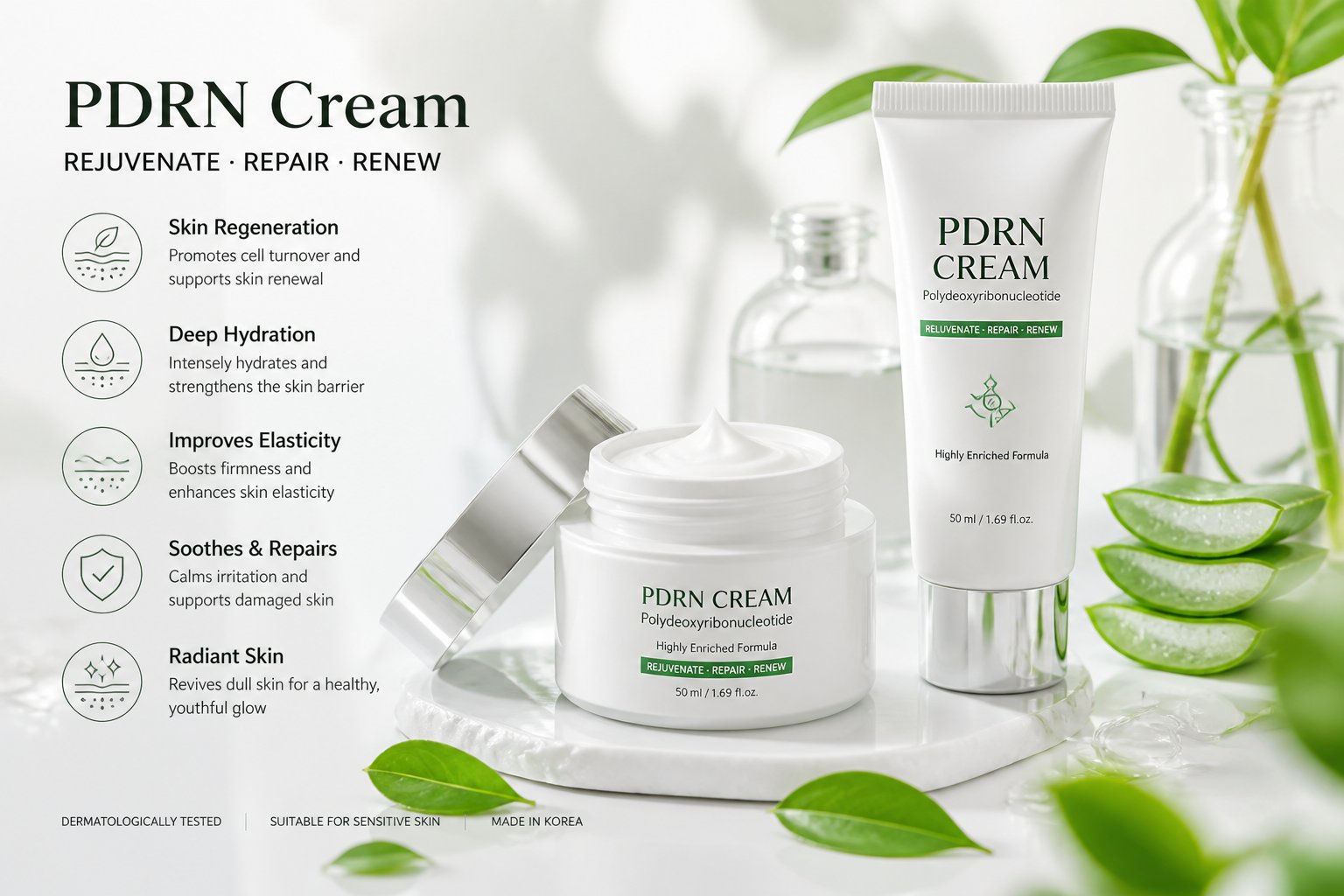
PDRN creams offer multiple skin benefits ranging from cellular repair to moisture retention. The ingredient works through regenerative pathways while the cream base provides barrier protection and sustained hydration.
Skin Regeneration and Wound Healing
PDRN consists of DNA fragments derived from salmon that signal skin cells to increase repair activity. Research indicates that PDRN can improve skin quality and support dermal regeneration, though more studies are needed to confirm the full extent of benefits.
The ingredient promotes collagen production at the cellular level. This process helps repair damaged tissue and supports the formation of new, healthy skin cells. Users often notice improved texture within one to two weeks of consistent application.
PDRN also reduces inflammation in the skin. This anti-inflammatory action creates an environment where wound healing can occur more efficiently. The combination of reduced inflammation and increased cell turnover makes PDRN effective for addressing skin concerns related to damage or aging.
Barrier Support and Hydration
The cream formulation provides essential moisture barrier protection that serums cannot deliver. PDRN creams use emulsion bases that blend water and oil phases to create a protective layer on the skin surface.
This layer prevents water loss throughout the day and night. The occlusive properties keep hydration locked in while allowing PDRN to remain in contact with skin for extended periods. Products like the Anua PDRN Hyaluronic Acid 100 Moisturizing Cream combine PDRN with hyaluronic acid and ceramide for comprehensive barrier support.
Many formulas include ceramides and squalane to strengthen the skin barrier further. These lipids fill gaps between skin cells and restore the protective outer layer. The result is skin that holds moisture better and resists environmental stressors more effectively.
Anti-Aging and Elasticity
PDRN stimulates collagen synthesis, which directly impacts skin firmness. Increased collagen production leads to improved elasticity and reduced appearance of fine lines over time.
Most users see noticeable firmness improvements after four to eight weeks. The ingredient works gradually by encouraging the skin’s natural repair mechanisms rather than providing instant but temporary plumping effects.
Peptides appear in many top PDRN cream formulations to boost anti-aging results. The combination of PDRN and peptides targets multiple aging pathways simultaneously. This dual approach addresses both cellular regeneration and structural protein formation.
Soothing and Brightening Effects
PDRN’s anti-inflammatory properties calm irritated and sensitive skin effectively. The ingredient reduces redness and discomfort without causing additional irritation in most users.
Many creams pair PDRN with ingredients like Centella asiatica for enhanced soothing benefits. This combination addresses inflammation from multiple angles. Users with reactive skin often find these formulas gentle enough for daily use.
Some PDRN creams include niacinamide to address hyperpigmentation and uneven tone. Niacinamide works alongside PDRN to brighten skin and reduce dark spots. The result is a more even complexion that approaches the smooth, luminous appearance often described as glass skin.
PDRN Cream Ingredients and Synergies
PDRN creams work best when paired with ingredients that support moisture retention, barrier repair, and collagen production. The concentration of PDRN itself matters as much as the supporting actives formulated alongside it.
Hyaluronic Acid and PDRN Pairings
Hyaluronic acid pulls moisture into the skin and creates an environment where PDRN can work more effectively. When skin cells are properly hydrated, they absorb active ingredients better than when the skin barrier is dry or compromised.
PDRN triggers collagen synthesis through adenosine A2A receptor activation. Hyaluronic acid holds up to 1,000 times its weight in water, which keeps the skin plump while PDRN works on deeper repair processes.
Triple hyaluronic acid complexes appear in many PDRN formulas because different molecular weights target different skin layers. Low-weight hyaluronic acid penetrates deeper, while high-weight versions sit on the surface to prevent water loss. This layered hydration approach supports the cellular repair work that PDRN initiates at the dermal level.
Role of Niacinamide, Panthenol, and Ceramides
Niacinamide strengthens the skin barrier and reduces inflammation, which complements PDRN’s tissue regeneration effects. Both ingredients address redness through different pathways—PDRN through NF-κB inhibition and niacinamide through cytokine regulation.
Panthenol converts to vitamin B5 in the skin and acts as a humectant and anti-inflammatory agent. PDRN creams often include panthenol to calm irritation while the regenerative actives work on collagen production.
Ceramides rebuild the lipid barrier that protects skin from moisture loss and external irritants. When used with PDRN, ceramides create a protective layer that keeps the skin environment stable enough for cellular repair to occur. This combination works well for sensitive skin types that need repair without irritation.
Glycerin functions as a simple humectant that draws water from the air into the skin. It creates a base level of hydration that allows more complex actives like PDRN to penetrate effectively.
Collagen, Peptides, and Supporting Actives
Hydrolyzed collagen in topical creams provides amino acids that skin cells use as building blocks during repair. PDRN stimulates the body’s own collagen production, while hydrolyzed collagen supplies raw materials for that process.
Peptides are short chains of amino acids that signal skin cells to produce more collagen, elastin, and other structural proteins. When paired with PDRN, peptides add another layer of signaling that tells cells to repair and rebuild.
Some formulas combine PDRN with snail mucin, which contains glycoproteins, glycolic acid, and zinc. Snail mucin has its own regenerative properties that work through different mechanisms than PDRN, creating a broader repair effect.
The synergy between PDRN and peptides or collagen creates multiple pathways for skin improvement. PDRN handles receptor activation and nucleotide supply, while peptides and collagen fragments provide direct building materials and additional cellular signals.
Assessing PDRN Concentration in Creams
The effective topical range for PDRN falls between 0.5% and 1% (5,000 to 10,000 ppm) based on Korean dermatological research. Products below 0.3% deliver minimal benefit, while concentrations above 1% lack evidence of additional results.
Most brands do not disclose PDRN concentration on their packaging, which makes it difficult to evaluate whether a cream contains an effective dose. When concentration is listed, it may appear as a percentage or in parts per million: 1,000 ppm equals 0.1%, and 10,000 ppm equals 1%.
Only 30% to 50% of topically applied PDRN reaches the viable epidermis and dermis, according to industry data. This absorption limitation makes concentration critical—a cream with 0.3% PDRN may deliver only 0.1% to 0.15% to the target tissue.
Cream textures typically create a heavier barrier than serum formulas, which can reduce PDRN penetration. Lightweight water-based textures applied to freshly cleansed skin generally support better absorption than thick cream bases that sit on the surface.
Best PDRN Creams and Topical Products of 2026
Top-rated PDRN creams combine salmon DNA or plant-based alternatives with hydrating ingredients like hyaluronic acid and peptides to repair skin and improve elasticity. Different formulas work better for specific skin types, with options ranging from lightweight gels to barrier-repairing balms.
Editors’ and Dermatologists’ Top Choices
Dr. Reju-All Advanced PDRN Rejuvenating Cream (see review) earns the editor’s choice designation for its 99% pure PDRN salmon DNA combined with collagen, hyaluronic acid, and niacinamide. This premium moisturizer works overnight to repair and firm skin while delivering a luminous, glass skin finish.
Rejuran Nutritive Cream (see review) stands out among Korean salmon DNA creams for its c-PDRN formula that restores radiance and supports youthful firmness. The 1.69 fl. oz. tube provides deep nourishment for dehydrated or aging skin.
Dr. Althea PDRN Reju 5000 Cream (see review) features an ointment-like texture with Biome PDRN to boost elasticity. Its formula includes panthenol and Centella asiatica leaf water to calm irritation while triple hyaluronic acid delivers lasting hydration for all skin types.
Medicube PDRN Pink Collagen Capsule Cream (see review) has become synonymous with PDRN-based products and offers five different plumping peptides in its recognizable pink formula.
Performance for Different Skin Types
ANUA PDRN Hyaluronic Acid 100 Moisturizing Cream (see review) works well for sensitive and dehydrated skin through its 100ppm PDRN concentration and smart capsule technology. The 2.0 fl. oz. jar contains tiny moisture capsules that burst on application, leaving skin smoother without fragrance or heaviness.
TOSOWOONG PDRN Collagen Jelly Cream (see review) provides a lightweight solution for those who find traditional PDRN creams too heavy. Its jelly texture contains 5,000ppm salmon DNA PDRN with niacinamide and hydrolyzed collagen to brighten and restore elasticity in dull or uneven skin.
VT Cosmetics PDRN Capsule Cream (see review) delivers intense hydration for dry and aging skin with its high 100,000ppm PDRN concentration. The formula includes hyaluronic acid and nine peptides to boost elasticity and revitalize tired complexions.
Different concentrations suit different needs. Lower PDRN amounts work for maintenance while higher concentrations target specific aging concerns.
Vegan and Sensitive Skin Options
Plant-based PDRN alternatives use seaweed and banana extracts instead of salmon DNA for those avoiding animal-derived ingredients. These vegan PDRN formulas deliver similar skin rejuvenation benefits without fish sources.
Heveblue Salmon Caring Centella Cream (see review) combines traditional PDRN with centella asiatica for extra soothing properties. This makes it suitable for reactive skin that needs both repair and calming benefits.
Sensitive skin formulas focus on minimizing irritation while still providing PDRN benefits. These products typically exclude fragrances and harsh additives that trigger redness or flushing.
The ANUA PDRN moisturizer works particularly well for sensitive types due to its fragrance-free formula and gentle capsule delivery system.
Barrier-Focused and Recovery Creams
Genabelle PDRN Enriched Recovery Balm specializes in barrier repair with its 5,000ppm PDRN and 10,000ppm panthenol combination. The rich yet lightweight balm strengthens compromised skin barriers while calming irritation and delivering intense hydration.
This recovery balm suits skin that experiences frequent irritation, dehydration, or stress-related damage. Its high panthenol content works alongside PDRN to fortify and nourish sensitized complexions.
Barrier-focused formulas prioritize skin recovery over other benefits. They typically feature thicker textures and occlusive ingredients that seal in moisture while PDRN works to repair damaged tissue at the cellular level.
The best PDRN cream for barrier repair depends on damage severity. Mild barrier disruption responds to lighter creams while chronic issues benefit from dedicated recovery balms with higher active concentrations.
Notable Serums, Toners, Masks, and Other PDRN Formulas
PDRN formulas extend beyond creams into serums that deliver concentrated doses, toners that prep skin for absorption, masks that provide intensive treatments, and specialized products for lips and eyes. Each format offers unique benefits depending on skin goals and preferred application methods.
Breakdown of Best Serums
PDRN serums contain higher concentrations of the active ingredient compared to creams. The Anua PDRN Hyaluronic Acid Capsule 100 Serum combines PDRN with multi-weight hyaluronic acid, niacinamide, and collagen in a lightweight emerald-toned formula that absorbs quickly without stickiness.
This type of product works well for layering under moisturizers and sunscreen. The texture ranges from fluid to gel-like depending on the formula.
Best PDRN serums typically feature salmon-derived PDRN ranging from 1,000 to 5,000 ppm. They layer easily into existing routines between cleansing and moisturizing steps. Some formulas include vegan alternatives derived from plant sources for those avoiding animal-derived ingredients.
The key advantage of serum formats is their ability to deliver potent doses of PDRN directly to skin without heavy textures. They penetrate quickly and pair well with other treatment products.
Recommended Toners and Mists
PDRN toners prepare skin to better absorb subsequent products while delivering hydration and barrier support. The COSRX B5 Vital Soothing Toner blends five types of PDRN from salmon, centella, rice, lactobacillus, and sea grapes with vitamin B5 and eight types of hyaluronic acid.
This product sits between a traditional toner and hydrating essence in texture. It absorbs quickly without sticky residue and soothes redness or post-exfoliation sensitivity.
PDRN toners work by hydrating skin immediately after cleansing. They can be patted on with hands or applied using cotton pads as a quick mask. The lightweight nature makes them suitable for layering multiple times or mixing with other toner steps in multi-step routines.
Popular Masks, Ampoules, and Wrapping Creams
The Rejuran c-PDRN Turnover Mask stands out among sheet masks for its patented c-PDRN combined with aloe, niacinamide, and centella. The ultra-microfiber sheet delivers serum deeply without slipping or drying out during the 15 to 20 minute application.
Overnight wrapping masks like the medicube PDRN Pink Caffeine Night Wrapping Mask provide deep hydration while making skin more plump by morning. The Face Shop Rice Collagen Glow PDRN Wrapping Mask uses plant-derived PDRN with rice extracts and collagen, forming a thin film that peels off to reveal brighter, more even-toned skin.
PDRN ampoules contain highly concentrated formulas similar to serums but in smaller doses. They deliver intensive treatment for specific concerns like dullness or loss of elasticity.
Lip, Eye, and Targeted Products
PDRN has expanded into specialized products for delicate facial areas. The Abib PDRN Glazed Jelly Collagen Lip Mask targets lip hydration and smoothness using PDRN’s regenerative properties on thin lip skin.
Eye products with PDRN address fine lines and under-eye concerns in gentle formulas suitable for sensitive periorbital skin. These targeted treatments deliver benefits to areas where traditional creams might be too heavy.
Specialized PDRN products work best when applied to clean, dry skin in the specific area. Lip masks can be used before bed or as a treatment step before makeup application.
How to Choose and Use PDRN Skincare
The right PDRN product depends on skin type, formulation quality, and how it fits into an existing routine. Proper application timing and ingredient pairing determine whether PDRN delivers visible results or sits ineffectively on the skin surface.
Selecting for Your Skin Type and Concerns
Oily and combination skin types perform best with lightweight PDRN serums that absorb quickly without adding heaviness. These water-based formulas typically contain concentrations between 0.5% and 1%, which industry data suggests is the effective range for topical PDRN.
Dry and mature skin benefits from PDRN creams that combine regenerative nucleotides with hydrating ingredients like hyaluronic acid and panthenol. The ointment-like texture provides barrier support while delivering active ingredients.
Sensitive skin should start with products listing PDRN concentration clearly on the label. Formulas below 0.3% may not provide meaningful benefits, while those above 1% lack research support for additional effectiveness.
Anyone concerned about elasticity loss, fine lines, or post-inflammatory marks can incorporate topical PDRN into their regimen. The ingredient works through adenosine A2A receptor activation rather than exfoliation, making it suitable for skin that cannot tolerate retinoids.
Layering With Other Skincare Ingredients
PDRN serum should be applied after toner and before moisturizer in a korean skincare routine sequence. This placement allows the ingredient to penetrate pH-balanced skin before heavier occlusives seal the surface.
The ingredient pairs well with vitamin C because they work through different pathways. PDRN stimulates collagen production through receptor activation while vitamin C acts as a cofactor in collagen structure formation. Niacinamide also layers effectively with PDRN without competition.
Users can combine PDRN with retinol in the same routine by applying them at different times. PDRN works morning and evening, while retinol typically goes on at night. When used together in an evening routine, apply PDRN first on clean skin, wait a few minutes, then apply retinol.
SPF 30 or higher must follow morning PDRN application. UV exposure degrades the collagen that PDRN works to rebuild, making sun protection essential for results.
Post-Procedure and Sensitive Skin Protocols
PDRN functions as an effective skin booster after professional treatments like microneedling or laser resurfacing. The ingredient’s anti-inflammatory properties and cellular repair mechanisms support recovery without irritation risk.
Patients should wait 24-48 hours after microneedling before applying topical PDRN products unless a dermatologist directs otherwise. Once the skin barrier has closed, PDRN can accelerate healing and reduce downtime.
For redness-prone or compromised skin, PDRN offers barrier support without the sensitizing effects of acids or retinoids. Products containing both PDRN and centella asiatica deliver dual-action soothing and regeneration.
Those recovering from aggressive treatments should choose fragrance-free PDRN formulas with minimal additional actives. Simple formulations reduce the chance of irritation during the healing window.
Tips for Maximizing Results
Apply PDRN to damp skin immediately after toner for improved absorption. Water-soluble ingredients like PDRN penetrate more effectively when the skin surface is hydrated rather than completely dry.
Consistency matters more than quantity. A few drops of properly concentrated serum used twice daily outperforms sporadic application of larger amounts. Most users notice texture improvements within 4-6 weeks of regular use.
Store PDRN products away from direct sunlight and heat. While the ingredient has a strong safety profile, nucleotides can degrade with improper storage, reducing effectiveness over time.
Patch test new PDRN products on the inner forearm before facial application, especially for those with fish sensitivities. Wait 24 hours to check for any reaction before proceeding with full-face use.
Science, Safety, and Limitations
Research on PDRN creams shows promise for skin rejuvenation, but the evidence base remains limited compared to injectable treatments. Safety profiles appear favorable for most users, though sourcing and allergy concerns require attention.
What the Latest Research Shows
Current research on PDRN in dermatology examines its efficacy for treating various skin conditions. Studies indicate that PDRN promotes angiogenesis, cellular activity, and collagen synthesis in skin tissue.
The molecule works by activating adenosine A2A receptors in cells. This triggers anti-inflammatory responses and stimulates tissue repair processes.
Reviews of PDRN’s anti-aging potential highlight its effects on soft tissue regeneration and skin revitalization. Research shows PDRN can address hyperpigmentation and support overall skin barrier function. However, the field remains in an embryonic stage, with experts calling for more rigorous clinical trials.
C-PDRN, a concentrated form, appears in some premium formulations. Studies suggest higher concentrations may deliver enhanced results, though data comparing different PDRN products remains scarce.
Allergy and Sourcing Considerations
PDRN extracts typically come from salmon sperm, which raises specific safety questions. People with fish allergies need to exercise caution before using these products.
The salmon sperm facial trend has popularized PDRN treatments, but not all users understand the biological origin. Manufacturers extract and purify the DNA fragments through controlled processes to minimize allergenic proteins. Still, residual fish proteins may trigger reactions in sensitive individuals.
Safety profiles and side effects indicate most users tolerate PDRN well. Common reactions include:
- Mild redness at application sites
- Temporary skin sensitivity
- Rare allergic responses in fish-sensitive individuals
Patch testing helps identify potential reactions before full-face application. Users should verify that PDRN products undergo proper purification and quality control measures.
Limitations Compared to In-Clinic Treatments
Topical PDRN creams face significant penetration challenges. The skin barrier prevents large molecules from reaching deeper tissue layers where regeneration occurs.
Evidence suggests topical PDRN shows promise when delivered via microneedling, but simple cream application proves less effective. Injectable PDRN treatments bypass this barrier entirely, delivering active ingredients directly to target areas.
Key differences between formats:
| Treatment Type | Penetration Depth | Efficacy |
|---|---|---|
| Topical creams | Surface layers only | Limited without device assistance |
| Microneedling with PDRN | Mid-dermis | Moderate to good |
| Injectable PDRN | Deep dermis | Highest clinical evidence |
PDRN booster serums claim enhanced absorption through specialized delivery systems. However, few independent studies verify these claims. The molecular size of PDRN remains a fundamental obstacle for topical formulations.
Future Directions for PDRN in Dermatology
Research continues to evaluate PDRN applications beyond basic anti-aging. Scientists explore its potential for wound healing, hair regeneration, and acne scar treatment.
New delivery technologies aim to improve topical absorption. Nano-encapsulation and lipid-based carriers show promise in early testing. These methods could help PDRN molecules penetrate deeper skin layers without needles.
Combination treatments pairing PDRN with other active ingredients require further study. Researchers investigate whether PDRN enhances the effects of retinoids, peptides, or growth factors. Clinical trials with standardized protocols would help establish optimal concentrations and application frequencies for home-use products.
Frequently Asked Questions
PDRN cream users typically want to know about realistic timelines, compatibility with their skin type, and how different products stack up against each other. Safety concerns and real user experiences also shape purchasing decisions.
What visible results can you expect before and after consistent use?
PDRN cream primarily improves skin hydration, texture, and barrier repair rather than delivering dramatic transformations. Users typically notice smoother skin texture and reduced redness within the first few weeks. Fine lines may appear softer as the skin becomes better hydrated.
The ingredient works by activating adenosine A2A receptors to stimulate collagen production and supporting cellular repair through the DNA salvage pathway. These mechanisms take time to produce visible changes. Most users see their best results after 8 to 12 weeks of consistent use.
Before and after photos often show improvements in skin plumpness and overall radiance. However, PDRN works best as part of a complete routine rather than as a standalone anti-aging solution.
How long does it typically take to see noticeable improvements in skin texture or tone?
Most people notice initial improvements in hydration and skin comfort within 2 to 3 weeks of daily use. The skin often feels softer and looks less dull during this early phase. These changes reflect improved moisture retention rather than deeper structural changes.
Texture improvements typically become visible around the 4 to 6 week mark. Small bumps may smooth out and pore appearance may refine as barrier function improves. Tone evenness usually takes longer to develop.
Significant results in firmness and tone generally require 8 to 12 weeks of consistent application. This timeline reflects the time needed for increased collagen synthesis and cellular turnover to produce visible effects. Products formulated at effective concentrations between 0.5% and 1% produce better results than those with lower concentrations.
Is it suitable for sensitive or acne-prone skin, and what side effects are most common?
PDRN cream is generally well-tolerated by sensitive skin types. The purification process removes proteins and biological material that could trigger immune reactions. Post-marketing surveillance of over 300,000 PDRN prescriptions confirmed no toxic effects over five years.
Acne-prone skin can typically use PDRN without issues, but cream formulations may feel heavy for oily skin types. Lighter serum textures often work better for those prone to breakouts. The ingredient itself is non-comedogenic.
Side effects are uncommon. Some users experience mild temporary redness when first starting, especially if applying too much product. A patch test on the inner arm helps identify any individual sensitivities before facial application.
How do dermatologists generally evaluate its effectiveness and safety compared with similar skincare actives?
Dermatologists recognize PDRN as a safe ingredient with a strong pharmaceutical safety record. Its mechanisms differ from common actives like retinol and vitamin C, making it complementary rather than competitive. PDRN activates repair pathways without the irritation potential of retinoids.
The effectiveness assessment depends on expectations. PDRN excels at barrier repair, hydration, and supporting skin stressed by procedures or environmental damage. It performs differently than ingredients targeting specific concerns like hyperpigmentation or deep wrinkles.
Compared to peptides, PDRN offers a broader mechanism through both receptor activation and nucleotide supply. Compared to growth factors like EGF, PDRN provides anti-inflammatory benefits that complement rather than duplicate single growth factor effects. Most dermatologists view it as a supportive ingredient that works best alongside proven actives.
How does Dr. Rejuall (Reju All) Advanced formula compare with other popular options on the market?
Dr. Rejuall Advanced formula positions itself as a higher-concentration option in the PDRN cream category. The brand emphasizes medical-grade formulation and clinical backing. Specific concentration disclosure varies by product batch and retailer.
Popular alternatives include Dr. Althea PDRN Cream, which combines PDRN with panthenol and centella asiatica for soothing benefits. Anua and Heveblue also offer well-reviewed Korean PDRN creams with different supporting ingredient profiles. Genabelle focuses on barrier repair alongside PDRN delivery.
The main differences between brands involve texture, concentration transparency, and complementary ingredients. Dr. Rejuall tends toward richer textures suitable for dry skin. Lighter formulas from brands like SeoulCeuticals work better for combination or oily skin types. Price points range from $15 to $50 across different PDRN products.
What do Reddit users most commonly report about real-world results, irritation, and value?
Reddit users frequently report improved hydration and skin comfort as the most consistent PDRN cream benefits. Posts emphasize that results are subtle rather than dramatic. Many users appreciate the calming effect on irritated or reactive skin.
Irritation complaints are rare in Reddit discussions. When they occur, users typically attribute reactions to heavy cream bases rather than the PDRN ingredient itself. Some users with very oily skin report breakouts from rich textures blocking pores.
Value assessments vary widely. Users who prioritize barrier repair and gentle hydration tend to feel PDRN creams justify their cost. Those expecting retinol-level anti-aging results often express disappointment. The consensus suggests PDRN works best for maintenance, recovery, and support rather than as a primary treatment for aging or pigmentation.
Related: